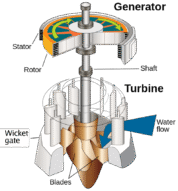
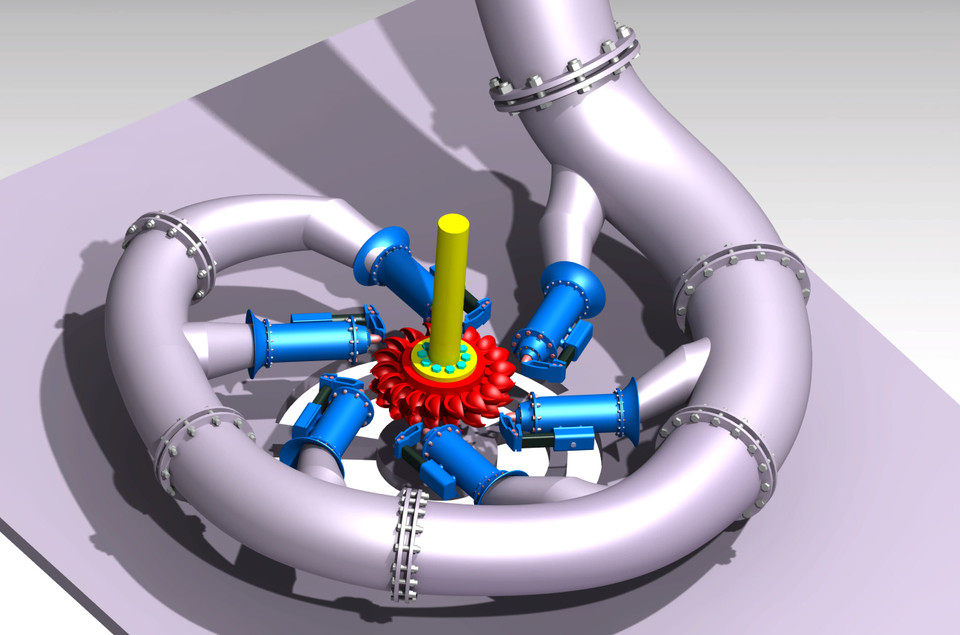
A Pelton turbine is a type of impulse turbine used in hydropower plants to generate electricity, especially in high-head, low-flow water conditions. It transforms the potential energy of elevated water into kinetic energy using high-speed jets that strike cup-shaped buckets mounted on a wheel. This impact causes the Pelton wheel to rotate, powering a generator to produce electricity.
Pelton turbines are ideal for mountainous regions, where rivers descend from great heights but have relatively low flow rates.
🔄 Step-by-Step Working Principle of Pelton Turbine
1. Conversion of Potential to Kinetic Energy
Water from a high-elevation reservoir flows through a penstock to a nozzle, where its pressure energy is converted into a high-velocity jet of kinetic energy.
2. Application of Impulse Force
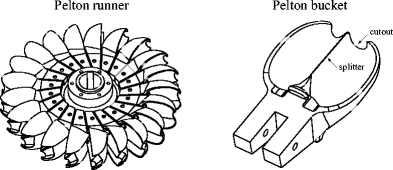
The water jet strikes the double-cupped buckets on the Pelton wheel. As an impulse turbine, energy conversion occurs before water contacts the runner.
3. Momentum Transfer
The jet hits the splitter in each bucket, dividing into two streams and deflecting nearly 180 degrees. This sharp redirection transfers momentum to the wheel.
4. Wheel Rotation
The continuous jet impact generates torque, causing the Pelton runner to rotate and initiate mechanical motion.
5. Energy Conversion
The rotating wheel converts kinetic energy into mechanical energy. The bucket design ensures maximum energy extraction.
6. Electricity Generation
The rotating shaft connects to a hydroelectric generator, which converts mechanical energy into electrical energy for grid distribution.
7. Flow Control and Governing
A governing mechanism, typically a needle valve, regulates the water jet to maintain consistent turbine speed under varying load conditions.
🔍 Key Features of Pelton Turbine
| Feature | Description |
|---|---|
| Impulse Operation | Converts pressure energy to velocity before impact |
| High-Head Suitability | Ideal for heads between 300–2000 meters |
| Efficient Bucket Design | Splitter buckets ensure minimal energy loss |
| Durable Materials | Made from stainless steel or bronze |
| High Efficiency | Can reach up to 90% efficiency |
🌍 Applications of Pelton Turbine
- Mountain Hydropower Plants – High-altitude water sources with steep gradients
- Remote Power Stations – Micro-hydro setups in isolated regions
- Industrial Use – Renewable energy for industries near mountainous rivers
✅ Advantages of Pelton Turbine
- Excellent Efficiency in high-head, low-flow conditions
- Simple Design with fewer moving parts
- Durable Construction for long-term reliability
- Flexible Load Handling via flow control mechanisms
- Eco-Friendly electricity generation
- Long Service Life with proper maintenance
⚠️ Disadvantages of Pelton Turbine
- Not Suitable for Low-Head Sites
- Requires Robust Construction for high-pressure jets
- Bulky Design in large-scale installations
- High Initial Cost for infrastructure
- Seasonal Water Dependency may affect performance