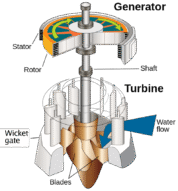
Hydro power dams are among the most dependable sources of renewable energy, playing a vital role in global electricity generation. To better understand their contribution to energy infrastructure, hydro power dams are typically classified based on operational mode, electrical capacity, structural design, and hydraulic head. Each classification reveals how these facilities generate power and manage water resources.
⚙️ 1. Classification by Operational Mode
The operational mode defines how hydropower plants utilize and regulate river water flow. This is the most common method of categorizing hydropower systems:
🔹 Impoundment Hydro power
- Most recognizable type of hydropower dam.
- Stores river water in a large reservoir behind the dam.
- Releases water through turbines to generate electricity.
- Ideal for large-scale, on-demand power and grid stability.
🔹 Diversion (Run-of-River) Hydro power
- Channels part of the river’s flow through a canal or penstock to a powerhouse.
- Requires minimal water storage.
- Power output depends on natural river flow.
- Environmentally friendly but less flexible.
🔹 Pumped-Storage Hydro power (PSH)
- Acts as a utility-scale energy storage system.
- Pumps water from a lower to an upper reservoir during low demand.
- Releases stored water during peak demand to generate electricity.
- Crucial for balancing intermittent renewables like solarand wind energy.
⚡ 2. Classification by Electrical Capacity
Hydro power dams are also categorized by their power generation capacity. Though standards vary, the following classifications are widely accepted:
| Type | Capacity Range | Common Use Cases |
| Large Hydro power | Over 30 MW (DOE); >1 MW (IHA) | National grids, industrial supply |
| Small Hydro power | 100 kW – 30 MW | Rural electrification, small towns |
| Micro Hydropower | Up to 100 kW | Single homes, small villages |
| Pico Hydropower | Less than 5 kW | Off-grid households, remote communities |
🏗️ 3. Classification by Structural Design
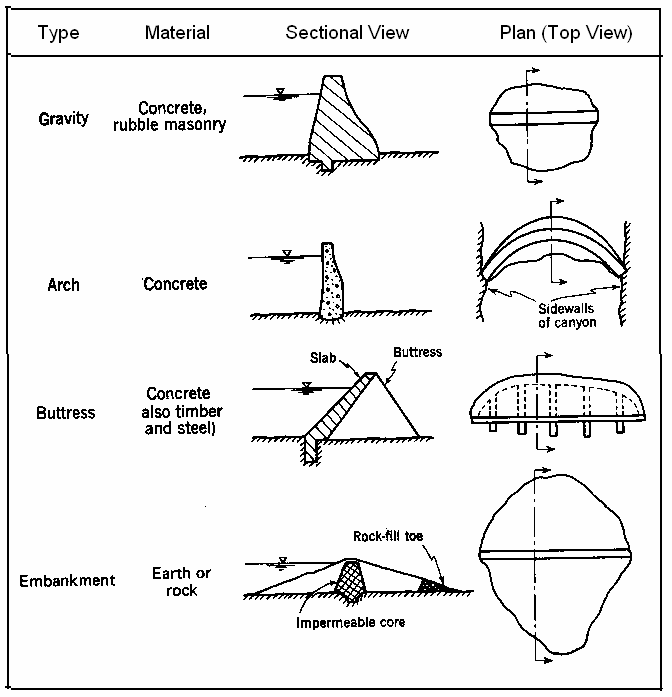
The structural design of a hydro power dam determines how it withstands water pressure and maintains stability. Major types include:
🔸 Gravity Dams
- Triangular cross-section; stability from weight.
- Constructed from concrete, stone, or masonry.
- Suitable for wide valleys with solid foundations.
🔸 Arch Dams
- Curved upstream-facing structure.
- Transfers water pressure to canyon walls.
- Made from concrete; thinner than gravity dams.
- Ideal for narrow, rocky canyons.
🔸 Buttress Dams
- Watertight upstream wall supported by downstream buttresses.
- Built mainly from concrete.
- Includes fixed, simple, or cantilever deck slab variants.
🔸 Embankment Dams
- Non-rigid, hill-shaped structures.
- Constructed using natural materials like earth or rock.
Subtypes:
- Earth fill Dams: Compacted soil with impermeable cores.
- Rock fill Dams: Large rocks lined with concrete membranes to prevent seepage.
💧 4. Classification by Hydraulic Head
The hydraulic head refers to the vertical distance water falls to drive turbines. It influences turbine selection and energy output:
| Head Type | Head Range | Common Turbines Used |
| Low-Head Plants | Less than 20 meters | Kaplan, Francis |
| Medium-Head Plants | 20 – 300 meters | Francis |
| High-Head Plants | Above 300 meters | Pelton wheel |
✅ Key Takeaways
- Hydropower dams are classified by operation, capacity, design, and hydraulic head.
- Impoundment and pumped-storage systems offer high flexibility for grid balancing.
- Small, micro, and Pico hydro power are essential for rural electrification and off-grid energy access.
- Structural design varies based on geography, geology, and engineering needs.
- Hydraulic head determines turbine type and overall plant efficiency.