Guide Bearing
🔍 Introduction
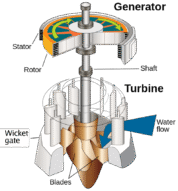
In hydro power plants, bearings are indispensable mechanical components that ensure the smooth, efficient, and reliable operation of turbine-generator units. Among the various types, guide bearings and thrust bearings play pivotal roles in managing mechanical loads, preventing shaft misalignment, and minimizing wear and tear. Understanding their functions, specifications, and classifications is essential for engineers, plant operators, and maintenance professionals aiming to optimize hydro power performance.
⚙️ What Are Bearings in Hydro power Plants?
Bearings in hydro power systems serve to support and stabilize the rotating shaft of the turbine-generator assembly. They are designed to handle two primary types of mechanical loads:
| Bearing Type | Load Type | Direction | Functionality |
|---|---|---|---|
| Guide Bearings | Radial Loads | Sideways Forces | Maintain shaft alignment and prevent deflection |
| Thrust Bearings | Axial Loads | Vertical Forces | Absorb downward thrust from water pressure |
By reducing friction and distributing forces evenly, bearings help maintain rotational stability, extend equipment lifespan, and ensure continuous power generation.
🧭 Guide Bearings in Hydro power Plants
✅ Purpose
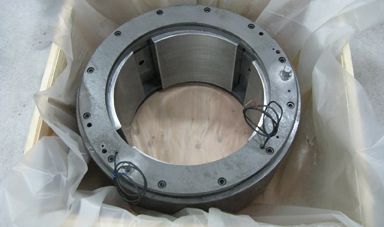
Guide bearings are engineered to counteract radial forces acting on the turbine shaft. These forces arise from rotational motion and water flow dynamics. Without proper guide bearings, the shaft could bend or misalignment, leading to mechanical failure.
📐 Key Specifications
- Load Capacity: Must withstand substantial radial forces generated during turbine operation.
- Lubrication: Typically oil- or grease-lubricated to reduce friction and dissipate heat.
- Operating Temperature: Oil bath temperature should remain below 50–60°C for optimal performance.
🧩 Classification of Guide Bearings
| Type | Description |
|---|---|
| Stiff Bearings | Rigid design; ideal for small-scale turbines with minimal shaft deformation. |
| Tilting Pad Bearings | Feature movable pads for enhanced hydrodynamic stability in large units. |
| Self-Aligning Bearings | Include spherical roller bearings that adjust to shaft misalignment. |
These classifications help engineers select the right bearing type based on machine size, shaft dynamics, and operational conditions.
🛡️ Thrust Bearings in Hydro power Plants
✅ Purpose
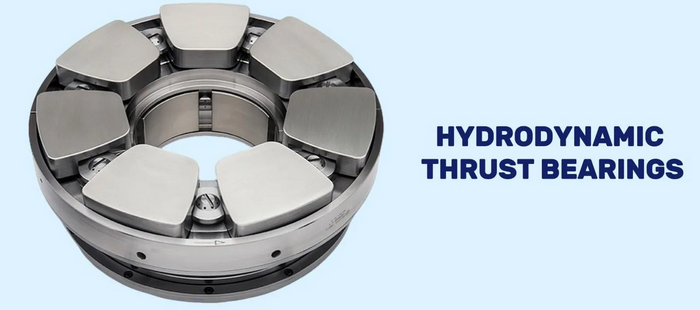
Thrust bearings are designed to absorb axial loads, particularly the vertical thrust exerted by water pressure on the turbine runner. Their role is critical in preventing the shaft from moving downward, which could cause catastrophic damage.
📐 Key Specifications
- Specific Pressure: Typically ranges from 2.5–4 MPa, with some designs handling up to 6 MPa.
- Temperature Limits: Pad surface should not exceed 80°C; oil bath maintained at 50–60°C.
- Lubrication: Primarily oil-based; some systems use water lubrication for environmental compatibility.
🧩 Classification of Thrust Bearings
| Type | Description |
|---|---|
| Pad-Type Bearings | Use multiple pads (stationary or tilting) to distribute axial loads evenly. |
| Single-Direction | Designed for turbines with unidirectional rotation. |
| Double-Direction | Suitable for reversible turbines with bidirectional thrust. |
| Spring-Supported Designs | Incorporate springs to balance load across pads, enhancing reliability. |
Advanced designs like Flexipad bearings offer improved thermal resistance, lower friction, and easier maintenance