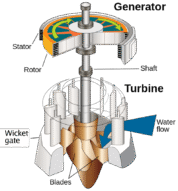
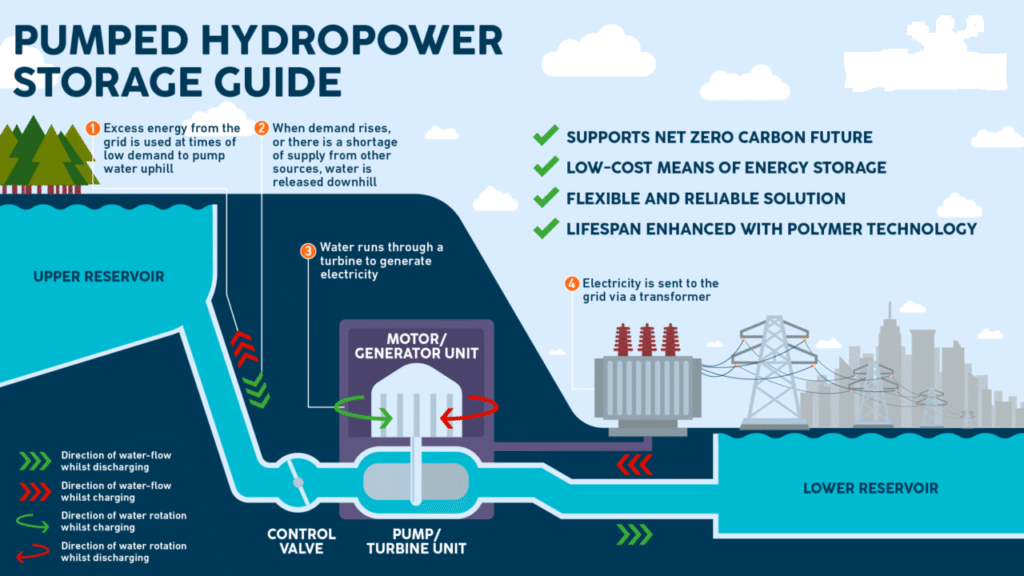
In the evolving landscape of renewable energy, Pumped Storage Hydropower (PSH) stands out as a critical energy storage technology that supports grid reliability, renewable integration, and long-term sustainability. While Run-of-River (ROR) hydropower offers a low-impact alternative, it lacks the flexibility and storage capabilities required for modern power systems.
This article explores the key differences between PSH and ROR, highlighting why PSH is the preferred choice for utility-scale energy storage and grid support.
🔋 1. Energy Storage Capability: PSH as a Giant Battery
- PSH Advantage: Functions like a large-scale battery by pumping water to an elevated reservoir during off-peak hours and releasing it to generate electricity during peak demand.
- ROR Limitation: Operates solely on river flow, offering no energy storage, which limits its reliability during dry seasons or low-flow conditions.
⚙️ 2. Grid Flexibility and Stability
- PSH Systems: Provide fast-response grid support, including frequency regulation, voltage control, and emergency backup power.
- ROR Plants: Lack the ability to ramp up or down quickly, making them unsuitable for dynamic grid demands.
🌞 3. Seamless Integration with Renewable Energy
- PSH Role: Stores surplus energy from solar and wind sources, releasing it when generation drops—such as at night or during calm weather.
- ROR Limitation: Cannot store excess renewable energy, reducing its effectiveness in balancing intermittent sources.
📈 4. Peak Load Management
- PSH Capability: Supplies electricity during high-demand periods, reducing reliance on fossil fuels and preventing grid overloads.
- ROR Constraint: Offers base-load power only, with limited ability to respond to demand spikes.
⏳ 5. Long-Duration Energy Storage (LDES)
- PSH Strength: Delivers multi-hour to multi-day energy storage, ideal for large-scale renewable integration and grid resilience.
- ROR Weakness: No storage capability, making it unsuitable for long-duration energy needs.
🌍 Environmental and Economic Impact
| Feature | Run-of-River (ROR) | Pumped Storage Hydropower (PSH) |
| Environmental Footprint | Low (no large reservoirs) | Moderate (requires reservoirs) |
| Energy Security | Limited by seasonal flow | High reliability year-round |
| Economic Value | Lower upfront cost | Higher ROI through grid services & fossil fuel reduction |
✅ Conclusion: Why PSH Is the Better Choice
While Run-of-River hydropower offers a sustainable, low-impact energy source, it falls short in addressing the complex demands of modern power grids. In contrast, Pumped Storage Hydropower provides:
- Reliable energy storage
- Rapid grid response
- Effective renewable energy integration
- Long-duration peak load support
For nations and utilities aiming to build a resilient, low-carbon energy future, PSH is the optimal solution.