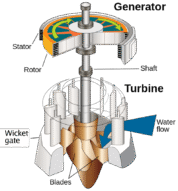
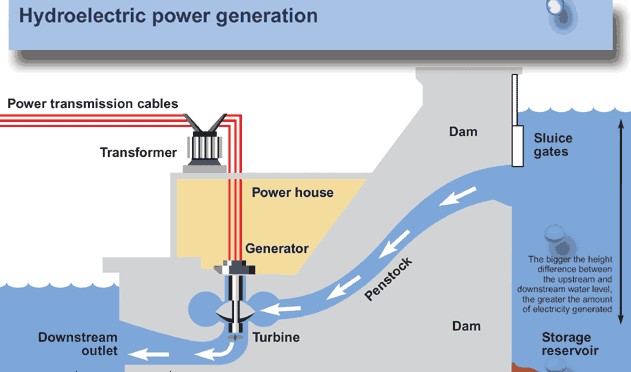
Hydro power, also known as hydroelectric power, is one of the oldest and most reliable forms of automated energy production. Unlike traditional human or animal-driven systems, hydro power harnesses the kinetic energy of flowing water to generate electricity. Historically, it began with the use of water to turn grindstones for milling grain, eventually evolving into the mechanical driving force behind electrical generators.
Before the widespread adoption of steam engines, hydro power was the dominant source of electricity. Even today, it remains a cornerstone of renewable energy infrastructure due to its consistent availability and mechanical simplicity.
Benefits of Hydro power
- Reliable and Consistent Energy Supply Unlike solar or wind energy, hydro power does not depend on weather conditions. Rivers and dams provide a steady flow of water, ensuring uninterrupted power generation.
- No Need for Energy Storage Because of its continuous availability, hydro power eliminates the need for expensive battery storage systems often required by solar and wind technologies.
- Low Operating Costs Once a hydro power plant is built, the cost of operation and maintenance is relatively low compared to fossil fuel plants.
- Environmentally Friendly Hydro power produces no direct greenhouse gas emissions, making it a clean alternative to coal or natural gas.
- Simple Mechanical Design The technology behind hydro power is largely mechanical, making it easier to understand, repair, and maintain compared to more complex systems.
Drawbacks of Hydro power
- Environmental Disruption Building dams and altering river flows can disrupt ecosystems, affect fish migration, and impact water quality.
- High Initial Costs Constructing a hydro power facility requires significant upfront investment and long-term planning.
- Limited Geographic Suitability Hydro power is only viable in regions with sufficient water flow and elevation changes, limiting its global applicability.
- Risk of Drought In areas prone to drought or seasonal water shortages, hydro power generation can be significantly reduced.
Why Hydro power Still Matters
Hydro power remains a vital part of the global energy mix. Its reliability, low emissions, and mechanical simplicity make it an attractive option for sustainable development. As technology advances and environmental concerns grow, optimizing hydro power systems for minimal ecological impact will be key to its continued success.
Hydro turbines are typically classified based on head, discharge, and inertia (or rotational characteristics). These classifications help engineers select the most suitable turbine for a given hydro power site.
Classification by Head (Height of Water Fall)
| Head Range | Turbine Type | Typical Examples |
| High Head | Impulse Turbines | Pelton, Turgo |
| Medium Head | Reaction Turbines | Francis |
| Low Head | Reaction Turbines | Kaplan, Bulb, Propeller |
- High head: > 300 meters
- Medium head: 30–300 meters
- Low head: < 30 meters
Classification by Discharge (Flow Rate)
| Flow Rate | Turbine Type | Characteristics |
| Low Discharge | Impulse Turbines | High velocity jets |
| Medium | Francis Turbines | Versatile applications |
| High Discharge | Kaplan/Bulb Turbines | Large volumes, low head |
- Impulse turbines are ideal for low flow, high head.
- Reaction turbines handle higher flow rates and are fully submerged.
Classification by Inertia (Rotational Speed / Specific Speed)
| Specific Speed (ns) | Turbine Type | Application Range |
| Low (10–50) | Pelton | High head, low flow |
| Medium (50–250) | Francis | Medium head and flow |
| High (250–1000+) | Kaplan, Bulb | Low head, high flow |
- Specific speed is a dimensionless parameter used to match turbine type to site conditions.
- Higher specific speed = faster rotation, suitable for low head/high flow.
Impulse Turbines vs. Reaction Turbines
| Feature | Impulse Turbine | Reaction Turbine |
| Energy Used | Only kinetic energy of water | Both pressure and kinetic energy |
| Water Flow | Water hits blades via nozzles | Water flows over blades inside casing |
| Pressure Change | No pressure change in runner | Pressure drops across the runner |
| Blade Design | Symmetrical buckets | Asymmetrical blades |
| Casing Requirement | No casing needed for operation | Requires a closed casing |
| Installation Location | Turbine is placed above water level | Turbine is submerged in water |
| Head Suitability | Best for high head, low flow | Best for low to medium head, high flow |
| Examples | Pelton, Turgo, Crossflow | Francis, Kaplan, Bulb |
Key Concepts
- Impulse Turbine: Converts water’s velocity into mechanical energy. Water jets strike the blades, causing rotation. Pressure remains constant.
- Reaction Turbine: Converts both pressure and velocity. Water flows through the blades, and pressure drops as energy is transferred.
Application Tips
- Use impulse turbines in mountainous regions with steep drops.
- Use reaction turbines in rivers or dams with steady, high-volume flow.